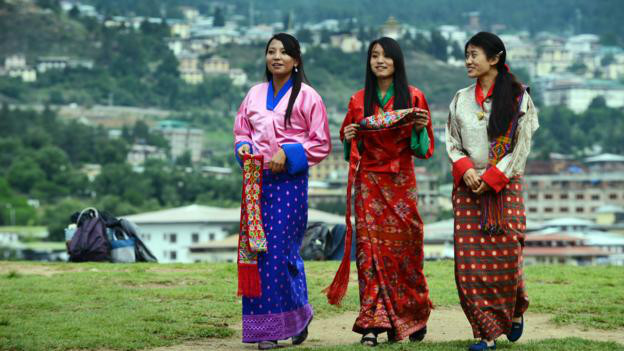
The current population of Bhutan stands at 781,952 (April 8, 2016) based on a United Nations’ estimate. The population of Bhutan represents only 0.01 percent of world’s total population. Bhutan has a very young population. At least 50% of the population are under seventeen. (source 1, 2,)
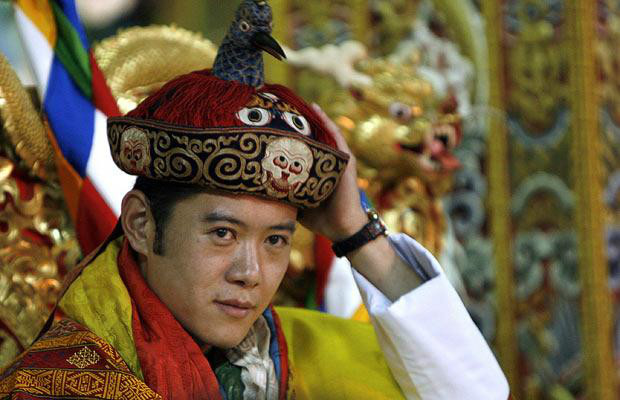
7 The King of Bhutan wears a Dzongkha or Raven’s Crown.Image Source: telegraph.co.uk
The kings of Bhutan wear a hat crowned with a raven known as a Dzongkha or Raven’s Crown. The raven symbolizes Mahakala, Bhutan’s guardian deity. The prototype of the Raven’s Crown was designed as a battle helmet for Jigme Namgyel. The raven is the national bird of Bhutan. At one time it was a capital crime to kill a raven in Bhutan. (source)
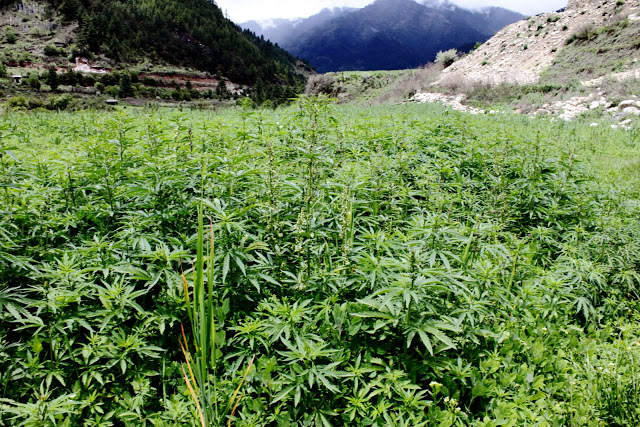
The majority of the population does not smoke the marijuana. It is fed to the pigs. Eating marijuana makes the pigs hungry and they consumes more food. This results in a very tasty bacon. (source)
Advertisements
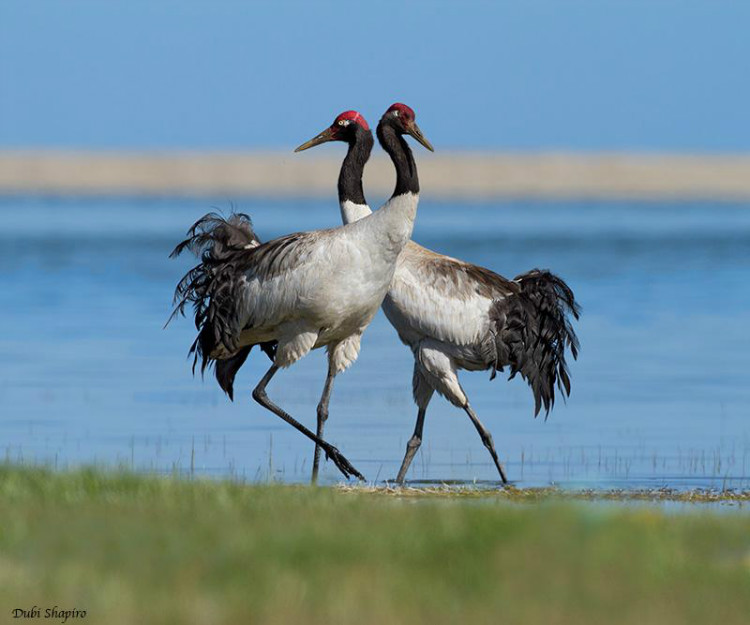
9 Anyone found guilty of killing a highly endangered and culturally sacred black-necked crane could be sentenced to life in prison.Image Source: Imgur
The Tibetan crane, or black-necked crane, is classified as endangered in IUCN’s Red List of Threatened Species. The list is maintained by the International Union for Conservation of Nature (IUCN). The black-necked cranes which were hunted until 1980 are now fully protected .
The government of Bhutan has enacted a law under which any person killing the bird would face life imprisonment. The black-necked cranes are considered sacred. Every year the Black-necked Crane Festival is held on  the 12th of November to welcome the cranes. (source)
10 Gangkhar Puensum, at 24,842 feet, is the highest point in Bhutan. It also is the highest unclimbed mountain in the world.Image Source: Imgur
Gangkhar Puensum is the highest mountain in Bhutan. The mountain is the 40th highest peak in the world. Surprisingly, the mountain has still never been climbed. “Gangkhar Puensum” means “White peak of three spiritual brothers”. The mountain borders Tibet and is a disputed territory. The Chinese maps put the mountain on the border, but other sources show the mountain in Bhutan.
Four expeditions made unsuccessful attempts to summit the mountain in 1985 and 1986, just after Bhutan opened it up for mountaineering. In 1994, the country withdrew permission for climbing mountains higher than 6,000 meters. This was done to conform with the spiritual beliefs and customs of the country. (source 1, 2)